Showing posts with label gay. Show all posts

Wednesday, July 31, 2024

Carl Phillips


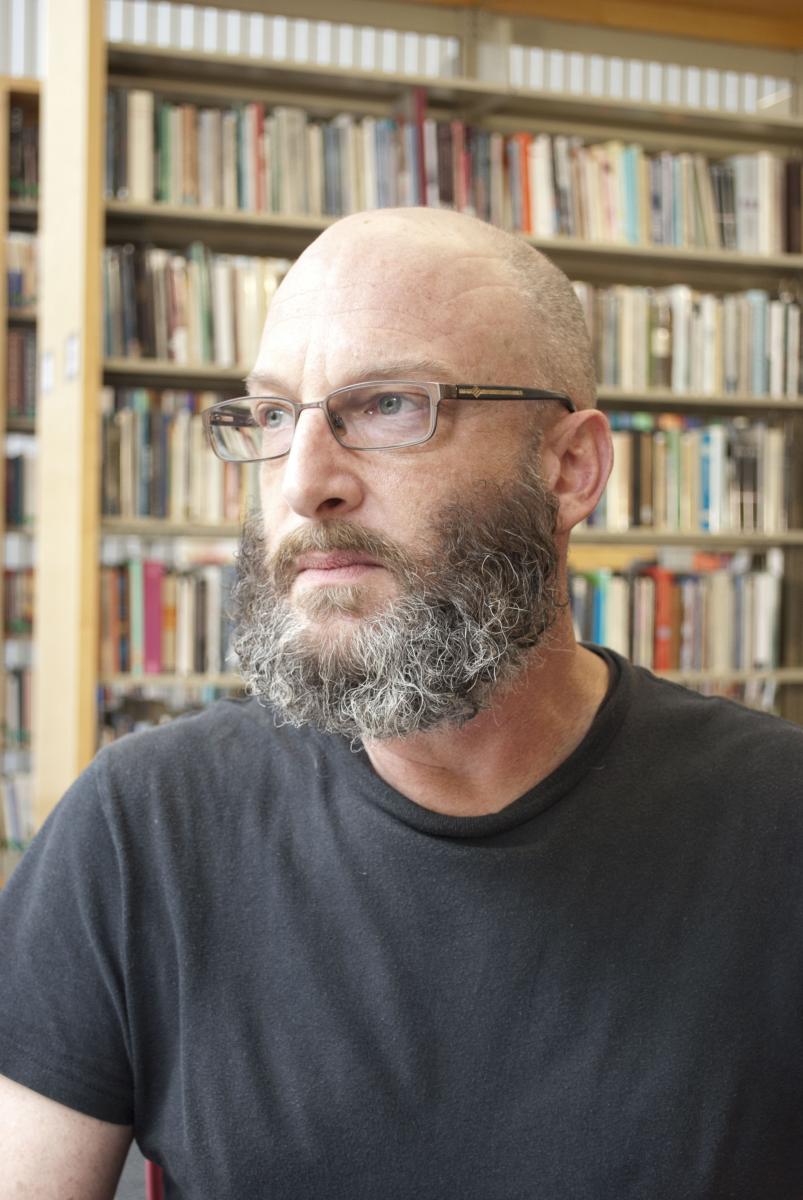
Carl Phillips Poets Picture


Steeple

Maybe love really does mean the submission of power—
I don’t know. Like pears on a branch, a shaking branch, 
in sunlight, 4 o’clock sunlight, all the ways we do harm, 
or refrain from it, when nothing says we have to.... Shining, 
everyone shining like that, as if reality itself depended 
on a nakedness as naked as naked gets; on a faith in each 
other as mistaken as mistaken tends to be, though I have 
loved the mistake of it—still do; even now—as I love
the sluggishness with which, like ceremony or, not much 
different, any man who, having seen himself at last, 
turns at first away—has to—the folded black and copper 
wings of history begin their deep unfolding, the bird itself, 
shuddering, lifts up into the half-wind that comes after—
higher—soon desire will resemble most that smaller thing, 
late affection, then the memory of it; and then nothing at all.

Tuesday, July 30, 2024

Carl Phillips


Passing

When the Famous Black Poet speaks, 
I understand 

that his is the same unnervingly slow 
rambling method of getting from A to B 
that I hated in my father, 
my father who always told me 
don't shuffle. 

The Famous Black Poet is 
speaking of the dark river in the mind 
that runs thick with the heroes of color, 
Jackie R., Bessie, Billie, Mr. Paige, anyone 
who knew how to sing or when to run. 
I think of my grandmother, said 
to have dropped dead from the evil eye, 
of my lesbian aunt who saw cancer and 
a generally difficult future headed her way 
in the still water 
of her brother's commode. 
I think of voodoo in the bottoms of soup-cans, 
and I want to tell the poet that the blues 
is not my name, that Alabama 
is something I cannot use 
in my business. 

He is so like my father, 
I don't ask the Famous Black Poet, 
afterwards, 
to remove his shoes, 
knowing the inexplicable black 
and pink I will find there, a cut 
gone wrong in five places. 
I don't ask him to remove 
his pants, since that too 
is known, what has never known 
a blade, all the spaces between, 
where we differ ... 

I have spent years tugging 
between my legs, 
and proved nothing, really. 
I wake to the sheets I kicked aside, 
and examine where they've failed to mend 
their own creases, resembling some silken 
obstruction, something pulled 
from my father's chest, a bad heart, 
a lung, 

the lung of the Famous Black Poet 
saying nothing I want to understand.

Carl Phillips


In this Light


Sure, I used to say his name like a truth that, just
by saying it aloud, I could make more true, which  
makes no more sense than having called it sorrow,
when it was only the rain making the branches hang
more heavily, so that some of them, sometimes,
even touched the ground…I see that now.  I can see 

how easy it is to confuse estrangement with what
comes before that, what’s really just another form
of being lost—lost, and trying to spell out wordlessly, 
hand-lessly, the difference between I fell and Sir,
I’m falling.  As for emptiness spilling where no one
ever wanted it to, and becoming compassion, as for 

how that happens—What if all we do is all we
can do?  What if longing, annihilation, regret are all this
life’s ever going to be, a little music thrown across and 
under it, ghost-song from a cricket-box when the last 
crickets have again gone silent, now, or be still forever,
as the gathering crowd, ungathering, slowly backs away?


Carl Phillips


To Be Worn Openly at the Wrist, or at the Chest and Hidden

If I believed in a god, he would be a sea god, like the sea
in its predictability—now approach, now recede—beneath
such a god I would not mind, I think, being the shore, say of the sea
what you will, it’s the shore that endures the routine loss
without which what strategies would there be for softening
the hollowness that any victory, give it time, comes with,
how curb the risk of arrogance, with its doomed but
not undangerous hound, complacency?
... I made this for you—
put it on. I know it’s not going to matter whether the decisions
I made were the ones eventually I even meant to make, or
should have, or should have thought maybe more than
twice about. What’s history anyway, except—according to
the latest mouth saying so—just what happened: I flourished
undramatically, to no apparent purpose, like pretty much
everyone. The sea dragged the shore; the shore suffered the sea.

Carl Phillips

Brothers in Arms

The sea was one thing, once; the field another. Either way,

something got crossed, or didn’t. Who’s to say, about

happiness? Whatever country, I mean, where inconceivable

was a word like any other lies far behind me now. I’ve

learned to spare what’s failing, if it can keep what’s living

alive still, maybe just

                                       awhile longer. Ghost bamboo that

the birds nest in, for example, not noticing the leaves, color

of surrender, color of poverty as I used to imagine it when

I myself was poor but had no idea of it. I’ve always thought

gratitude’s the one correct response to having been made,

however painfully, to see this life more up close. The higher

gods having long refused me, let the gods deemed lesser

do the best they can — so a friend I somewhere along the way

lost hold of used to drunkenly announce, usually just before

passing out. I think he actually believed that stuff; he must

surely, by now, be dead. There’s a rumored

                                                                               humbling effect

to loss that I bear no trace of. It’s not loss that humbles me.

What used to look like memory — clouds for hours breaking,

gathering, then breaking up again — lately seems instead

like a dance, one of those slower, too complicated numbers

I never had much time for. Not knowing exactly what it’s

come to is so much different from understanding that it’s come

to nothing. Why is it, then, each day, they feel more the same?

Carl Phillips

Carl Phillips by Reston Allen 

Through An Opening

It was as if they'd stepped into the head
of a wind god,and gotten trapped there and,
within captivity, made a space they could

sometimes recognize. Soon it looked
like home: chicken hawk; first stars;
a golden steeple. . . Almost, they could believe
each word of it,

the wordless parts also,
the particular riot—and beauty, for they did
admit as much—of a field on fire, the wind
tumbling through the god's hair, here and

there lifting it—so a kind of life, still—
They would make
a music of it. Singing
Hush now—why not hush? You're mine, coyote.


Tuesday, May 23, 2023

Saeed Jones

 Nocturne: Beheaded


      for Thapelo Makutle

All throat now      already brighter than the stars.

I could hold you in my song. Sotto voce, tremble

against me: a breeze slips in, cools my blood

to garnet      bed stained with stones, cold and finally

useless            I Orpheo,       I lyre.  Down river, even damned

with hum, there is room for your cry in my mouth       Sweet,

sweet sotto voce, I sang your moan until       the machete

swung      then I kept singing. I eyeless,      I eternal.

The guards hold blades to the sky and cut the dark open.

Do you hear me raining        from the wound? My tongue

is a kingdom       You live there.

Sunday, April 30, 2023

Carl Phillips

Rockabye


                      Weeping, he seemed more naked 
than when he’d been naked—more, even, than when
we’d both been. Time to pitch your sorrifying
someplace else, I keep meaning to say to him, and then 
keep not saying it. Lightning bugs, fireflies—hasn’t what
we called them made every difference. As when history
sometimes, given chance enough, in equal proportion
at once delivers
           and shrouds meaning . . . About love: a kind 
of scaffolding, I used to say. Illumination seemed
a trick meant to make us think we’d seen a thing more
clearly, before it all went black. Why not let what’s broken
stay broken, sings the darkness, I 
                                     make the darkness 
sing it . . . Across the field birds fly like the storm-shook shadows
of themselves, and not like birds. Never mind. They’re flying.

Tuesday, February 28, 2023

David Trinidad

Image 1 of 1 for A Taste of Honey. Bob Flanagan, David Trinidad. Cold Calm Press. 1990.


from An Attempt at Exhausting a Neiborhood in Chatsworth, California


 If you turned right on Superior, past the mystery house on the corner, you’d come upon, after a slight curve, Superior Street Elementary School, which I attended from grades one to six. The playground (which extended to Oso Avenue) protected by a tall chain-link fence. Scattered about the asphalt: baseball diamond, volleyball net, two wooden walls to bounce balls against (that had what looked like doors painted on them, their purpose always unclear), tetherball poles, jungle gym, rings, and, near the kindergarten classrooms, a large sandbox. Must I speak (once again) of the indignities of the playground, how I tried to avoid the aggression of ball-throwing boys by playing hopscotch, jacks, and Chinese jump rope with the girls. Or later, spending lunch hours in the library, reading the blue-bound biographies of famous Americans: Ben Franklin, Betsy Ross, Clara Barton, Daniel Boone, Dolly Madison, George Washington, Pocahontas, Thomas Jefferson. (I was most intrigued by the women.) Or the Little House series by Laura Ingalls Wilder. Her whole childhood captured in eight matching volumes. The titles alone were beautiful: On the Banks of Plum Creek, By the Shores of Silver Lake, These Happy Golden Years. Years of art projects: cutting an egg carton in half and painting it green, then adding eyes and two pipe cleaner antennas, and voila, a caterpillar. Or placing bits of tissue paper and yarn between two pieces of wax paper and ironing them, to produce a colorful “stained glass” collage. Years of current events. Of studying maps of the world (each country a different pastel shade, like our houses). And models of the solar system (each planet a hand-painted styrofoam ball). Years of report cards. (In elementary school they were called “progress reports.”) Grades for reading, English, handwriting, spelling, mathematics, geography, history, civics, science, art, music, and physical education. Grades for effort, work habits, and citizenship: “tries to do his best,” “follows directions,” “works cooperatively with other pupils,” “accepts responsibility,” “respects authority.” Years of fire drills. And in case of a nuclear attack, “drop” drills: In the middle of a lesson, the teacher would call out “Drop!” and we’d all huddle under our desks with our hands clasped over the back of our heads. All of my teachers were women: Mrs. Wiggins, Mrs. Field, Mrs. Kasower, Mrs. Bialosky (first name Kay, kind and patient and encouraging, whom I had for half of the first grade, and all of the third and sixth). Mrs. Morton (first name Milicent), my fifth-grade teacher, was the opposite of Mrs. Bialosky. Cold and strict, she had no use for a sensitive boy. My grades dropped that year, and I gained weight. Her best friend, Mrs. Price (first name Jeanine), was equally intimidating. The two of them dressed like immaculate Barbie dolls: white, short-sleeved blouses; sheath skirts with wide belts; spike heels. They wore their dyed hair (Mrs. Price, red; Mrs. Morton, black) in bouffants, like Elizabeth Taylor or Jacqueline Kennedy. It was rumored that Mrs. Price, originally from the South, was married to a “Negro musician.” Mrs. Morton (with Mrs. Price as witness) often took an incorrigible boy in my class (Jimmy) out to the bungalow where textbooks were stored, to thrash him with a yardstick. The only male teacher at the school was Mr. Bartell. His daughter Monica was also in my class. It was from Monica, in tears, that we learned, on November 22, 1963, as we were lining up after lunch, that President Kennedy had been shot. She’d heard it from her father. It’s the only time I remember seeing teachers upset. It was as if the world had stopped. We were sent home early.
Friday, February 3, 2023

Agha Shahid Ali


Learning Urdu

From a district near Jammu, 
(Dogri stumbling through his Urdu) 
he comes, the victim of a continent broken 
in two in nineteen forty-seven. 
He mentions the minced air he ate 
while men dissolved in alphabets 
of blood, in syllables of death, of hate. 

'I only remember half the word 
that was my village. The rest I forget. 
My memory belongs to the line of blood 
across which my friends dissolved 
into bitter stanzas of some dead poet.' 

He wanted me to sympathize. I couldn't, 
I was only interested in the bitter couplets 
which I wanted him to explain. He continued, 

'And I who knew Mir backwards, every 
couplet from the Diwan-e-Ghalib saw poetry 
dissolve into letters of blood.' He 

Now remembers nothing while I find Ghalib 
at the crossroads of language, refusing 
to move to any side, masquerading 
as a beggar to see my theatre of kindness. 

Wednesday, January 25, 2023

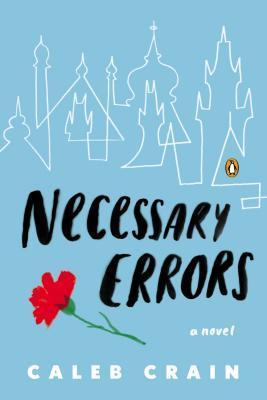
Caleb Crain


from Necessary Errors (2013)

At last there were shoes on the stairs again—louder this time, a clatter—and three young Czechs rushed down. The tallest, who had a comically long face and thin, sandy curls, seemed to be telling his companions a joke, which he himself laughed loudest at. “Dobrý vecer,” he saluted the attendant. There was something arch about the formality with which he spoke the greeting, and Jacob felt at once that he liked the young man. He drifted away from the wall he’d been leaning against, with the intention of slipping in behind the trio as soon as the attendant opened the grille. “Ahoj,” the tall, curly-haired man said to Jacob out of the corner of his mouth—now his voice was feline, and the greeting, sounding very much like the sailor’s hello in English, was a familiar one—to intimate that he had noticed Jacob’s approach.

The attendant had noticed it, too, and because Jacob didn’t want to take advantage of the young men’s entrée unless he was sure of their permission, and because he was put momentarily at a loss by the touch of proposal in the young man’s voice, he hesitated, and the attendant slammed the grille in his face with a clang.


Tuesday, January 24, 2023

Derrick Austin

 File:Frank-Bidart.jpg


Epithalamium


                    Today I'm happy by myselfwandering this creek's paths of sand and crushed shells,                    what used to be submerged.Mosquitos drain me good.Before this river was redirected, it joined two others                     and flowed into the Gulf.What we cannot change, we evade                     and call new. We delay. I couldcall the irrigation works at the headwater bog                                      an aubade                     against flooding.There are picnic spots nearby, gazebos and grillsemerging from palmettos and bindweed.A storm blew down the oak I'd climb to watchfireworks for free.Men still cruise out here.In this lush expanse a manwas lynchedat the beginning of the centuryI was born in.Moving off the trail, I wade into the river.Time feels suspended.My bare feetshuffle pebbles like some grubbing shore bird.Screeching insects, thickets of sweet bay and titi,moldering scent—All this will be gone someday.Gone that paths and signs, gone the milkweed, gonethe armadillos and the fieldand the lynching tree when this river rejoins the othersand washes this away—                                                     no, not gonebut come together, history, nature, love, and lossbrought to scale in a gloriousalgal bloom, a brightness of jade and amber,all this water moving toward where it's always belonged,where I cannot be, where I am.

Monday, January 23, 2023

Derrick Austin

Tenderness


Tenderness

That summer I was a body. I was that body. The Body.
Overnight, a fog of linen inside the mauve Victorian down the block.
Another house empty for the season, for the season, for the season.
Hours built up on both sides of my bedroom door.
Morgan and Danez rowed in the Grand Canal at Versailles.
Morgan filled a postcard with her hands and memory.
Rose quartz? A diary? Holy water? (With what belief?) What could I have asked for?
Leaving my apartment for the first time in days,
I walked five minutes to Lake Mendota. Barking, honking, shrieking, grunting.
Men tested their bodies for each other and themselves.
Opened doors to admit the breeze, the possibility of that one guest.
When Emily Brontë wrote they’ve gone through and through me, like wine through water,
and altered the colour of my mind, she wasn’t writing about my depression.
Double tapped a photo of Morgan and Angel
posing near a green door with hinges older than the Constitution.
They read their black poems in English
to black people who spoke English and French and Arabic.
If I sent a postcard to everyone I loved
it’d say, Sometimes I think you’re just too good for me.
The most personal question I’m consistently asked: Why are you so quiet?
That I’m getting this all down wrong. That I’m getting it down at all.

Caleb Crain

 ICaleb Crain

Sallies

In the afternoon four black-throated blues

Tossed themselves up from the pavement at nothing.
At the rain. And having made a surgeon take back
His stitches early, I lifted my phone
Beyond the shelter of my unsteady umbrella
And tapped at their cursive capital Gs.
Suddenly I felt ashamed. You could see
I had nothing better to do. I stopped.

Four in the morning. Fill the kettle by touch.
Floof the gas. Unpick the bandage
To look, though water does boil watched.
We can’t not solve the problem.
The sky facing the birds and me had glared
Like undeveloped photo paper.
Find a voice to sing against the voice
That doesn’t answer when asked why not.

Sunday, January 22, 2023

Richard Siken


Detail of the Hayfield

I followed myself for a long while, deep into the field. 
Two heads full of garbage. 

Our scope was larger than I realized, 
which only made me that much more responsible. 

Yellow, yellow, gold, and ocher. 
We stopped. We held the field. We stood very still. 

Everyone needs a place. 

You need it for the moment you need it, then you bless it— 
thank you soup, thank you flashlight— 

and move on. Who does this? No one.

Richard Siken


Richard Siken


Detail of the Fire

A man with a bandage is in the middle of something.
Everyone understands this. Everyone wants a battlefield.

Red. And a little more red.

Accidents never happen when the room is empty.
Everyone understands this. Everyone needs a place.

People like to think war means something.

What can you learn from your opponent? More than you think.
Who will master this love? Love might be the wrong word.

Let’s admit, without apology, what we do to each other.
We know who our enemies are. We know.


Richard Siken

Richard Siken looks into the distance while sitting in the Poetry Center library

Meanwhile 

  
Driving, dogs barking, how you get used to it, how you make 
                                the new streets yours. 
Trees outside the window and a big band sound that makes you feel like 
          everything's okay, 
      a feeling that lasts for one song maybe, 
                          the parentheses all clicking shut behind you. 
            The way we move through time and space, or only time. 
The way it's night for many miles, and then suddenly 
                                       it's not, it's breakfast 
    and you're standing in the shower for over an hour, 
                         holding the bar of soap up to the light. 
I will keep watch. I will water the yard. 
        Knot the tie and go to work. Unknot the tie and go to sleep. 
                             I sleep. I dream. I make up things 
    that I would never say. I say them very quietly. 
                            The trees in the wind, the streetlights on, 
        the click and flash of cigarettes 
being smoked on the lawn, and just a little kiss before we say goodnight. 
     It spins like a wheel inside you: green yellow, green blue, 
                                                                     green beautiful green. 
It's simple: it isn't over, it's just begun. It's green. It's still green.

Frank Bidart

File:Frank-Bidart.jpg

In Memory of Joe Brainard

the remnant of a vast, oceanic

bruise (wound delivered early and long ago)

was in you purity and 

sweetness self-gathered, CHOSEN

                                • 

When I tried to find words for the moral sense that unifies

and sweetens the country voices in your collage The Friendly Way,

you said It's a code.

You were a code

I yearned to decipher.—

In the end, the plague that full swift runs by

took you, broke you;—

                                           in the end, could not

                                           take you, did not break you—

you had somehow erased within you not only

meanness, but anger, the desire to punish

the universe for everything

not achieved, not tasted, seen again, touched—;

. . . the undecipherable

code unbroken even as the soul

learns once again the body it loves and hates is

made of earth, and will betray it.

mIEKAL aND

  Misha Sprocket,  do.not.hold.these.words.as.dear Limbs extending outward from. These eyes are your eyes, not mine? Subliminal does not sub...