Friday, February 17, 2023

Srikanth Reddy

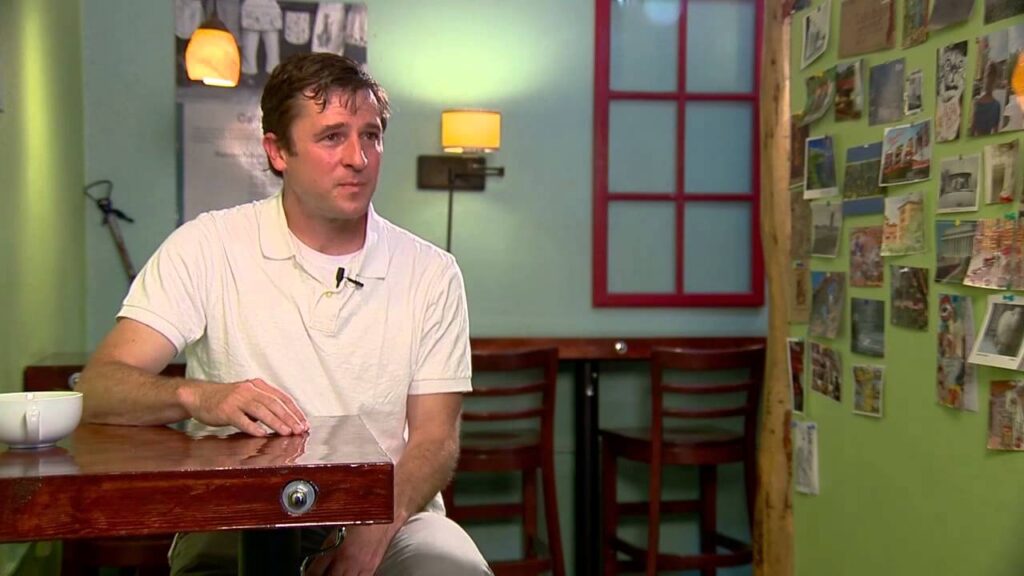
Poet Srikanth Reddy reads from and discusses his work during a Bagley Wright Lecture Series event hosted by the Poetry and Literature Center, September 10, 2015. Photo by Shawn Miller.


fromUnderworld Lit

XXIII

Read each question and circle the least incorrect option. Remain quietly seated when you are done.


1) The entrance to the Mayan underworld is located in  _____________.

      A. An underwater cave system in Bolivia
      B. The dark rift in the Milky Way
      C. A locked vault in the back office of the United Fruit Company
      D. All of the above


2) The sun god Ra journeys toward the third hour of the night on a  _____________.

      A. Funeral boat
      B. Serpent boat
      C. One-eyed boat
      D. Boat towed by jackals


3) The hero’s companion in the Epic of Gilgamesh dies of  _____________.

      A. Vehicle rollover
      B. Friendly fire
      C. Superficial spreading malignant melanoma
      D. Irrelevant question


4) The first large-scale multiple choice assessment was administered by  _____________.

      A. The Hindu god of death
      B. Jacques Derrida
      C. The United States Army
      D. All of the below


Monday, February 13, 2023

Martha Ronk

Woman in a Flowered Hat Artwork by Henri Matisse 
  •  


    Why Knowing Is (& Matisse's Woman With A Hat)

    Why knowing is a quality out of fashion and no one can decide to 
    but slips into it or ends up with a painting one has never 
    seen that quality of light before even before having seen it 
    in between pages of another book and not remembering who knows 
    or recognizing the questionable quality of light on her face 
    as she sits for a portrait and isn't allowed to move an inch 
    you recognize the red silk flower on her hat 
    and can almost place where you have seen that gray descending 
    through the light reversing foreground and background 
    as the directions escape one as the way you have to 
    live with anyone as she gets up finally from her chair 
    having written the whole of it in her head as the question 
    ignored for the hundredth time as a quality of knowing is 
    oddly resuscitated from a decade prior to this.

    Sunday, February 12, 2023

    Dan Beachy-Quick on Martha Rock


    These poems seek, in humble and honest ways, all that falls back into, or refuses to emerge from, the inexpressible rooted silently inside the givens of our lives—not to break the secret open, but more simply, more wondrously, to admit it’s there. Such poems return us to art’s fundamental courage: to note where facts and knowledge fray into the unknown from which they were first woven, and to ask those questions that end beyond the end of the poem.

    Dan Beachy-Quick, author of Of Silence and Song


    Martha Ronk


    "Scraps of Indigenous History"

    
    scratched hinterlands and the far-flung    cased behind glass
    
    collected in multiples        piecemeal and over time
    
    stitched with fishing twine          housed in museum vaults
    
    the ongoing       catapulted into waters moving out to
    
    unfinished sentences        songs of smoke       marks on clay
    
    a leg lifted in a dance       no one remembers
    
    land lived on is only for feet         dusty imprints blown away
    
    a headdress      woven      feathered        ribbon-trimmed
    
    beauty seared into skin         tattooed stripes on the chin
    
    scripts of uninformed information          eluded, erased
    
    land forms      left snake-like       telling us in what dialect
    
    anonymous was what      was Wiyot       was imprinted with a map
    
    was dark of face    was blue unborn       was landlocked
    
    was unnamed       was pictured only as the unseen
    

    Martha Ronk


    in the sky

    in the sky would be as others have recognized an anti-utilitarian move
    yet no doubt all humans have posited such—just their sounds and cries
    call it up—the gliding sideswoop raptors mostly, but in the twilight
    the swallows take to the abundant flying insects as if nothing else
    had ever existed, and that swarm near the edge of Peninsula road
    is one place to be on this peninsula not so different from any others
    these birds no words can get hold of—no adjectives, fonts, metaphors—
    how could even an ode praise one of them enough even out of the sky
    as an egret lifts one leg then another in slow progress in the shallows,
    undulating white against gray (unda/wave), language fails bird
    or idea as it moves as if water were an element to be distained

    Leonardo envisioned a device to be built of wood, reeds and taffeta: “A small
    model can be made of paper with a spring-like metal shaft that after having been
    released, after having been twisted, causes the screw to spin up into the air.”


    Martha Ronk


      from “A Foreign Substance”

                 “Wild Gardens Overlooked by Night Lights,” one of Barbara Guest’s most famous poems, begins where the title begins looking over gardens, night lights, buildings, parking lot trucks. Stanza two begins with an enigmatic pronoun without a clear antecedent:

                Wild gardens overlooked by night lights. Parking

                lot trucks overlooked by night lights. Buildings

                with their escapes overlooked by lights

                They urge me to seek here on the heights

                amid the electrical lighting that self who exists,

                who witnesses light and fears its expunging,

    What follows is an ekphrastic rearrangement in which the speaker removes a landscape painting from the wall and replaces it with a scene from “The Tale of Genji,” an episode where Genji recognizes his son. This action rescues the speaker from immobility and allows her to be “mobile like a spirit,” traveling in and out of the story, the picture, the emotional configurations of the episode itself; and it also seems as if the Genji move outside their reality (“their screen dismantled”) into the space of the speaker, “that modern wondering space/flash lights from the wild gardens.”

                        from The Chicago Review, 2007       

    Martha Ronk

    Pont Neuf, Paris


    Brassai’s night photos

    Photographing Paris at night, Brassai wanted to be raised

    to the level of object: the world is richer than I,

    the wall speaking to him in graffiti chipped from a childish drawing

    of interlocking hearts only seeming symbolic, only seeming impossible. 

    On such days reification attracts as the whole city spreads out before you,

    metempsychosis not from flesh to flesh, but (from where he stood

    his large camera before him) into bridges across the Seine.


    Martha Ronk

    Why/Why Not (New California Poetry) by Ronk, Martha - Picture 1 of 1


     She heard sparrows (Virginia Woolf)

    Something making a sound never made before, a series

    of slurred whistles in increasing tempo common, uncommon,

    invented for the sake of geography, birds of the air, the narrow eye ring

    a song from a branch of artemisia absinthium

    and bathing in indentations, a scattering of wings scattering dust,

    the rapidly unforeseen, something not exactly bird-like,

    night falling in layers, as the iconic aspect of all things hidden

    in paper and feathers, the brushed technique of feathering to absence—

    after a time the more they sound like creatures falling

    outside the imaginable, rustling, unfolding,

    a doubling of moments of having been here before,

    a feeling of transparent thickness over-layering,

    then the sparrow speaking four or five times prolonged and piercing

    in Greek words, from trees in the meadow

    beyond a river where the dead walk, how there is no death.


    mIEKAL aND

      Misha Sprocket,  do.not.hold.these.words.as.dear Limbs extending outward from. These eyes are your eyes, not mine? Subliminal does not sub...