It Was a Bichon Frisé's Life . . .
Sunday, September 25, 2022
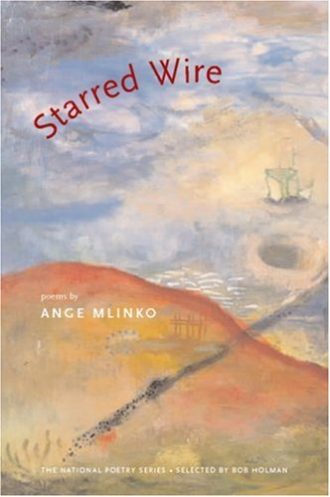
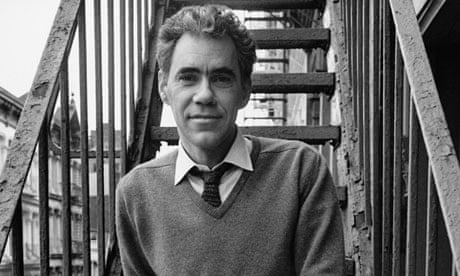
Ange Mlinko
Sunday, September 11, 2022
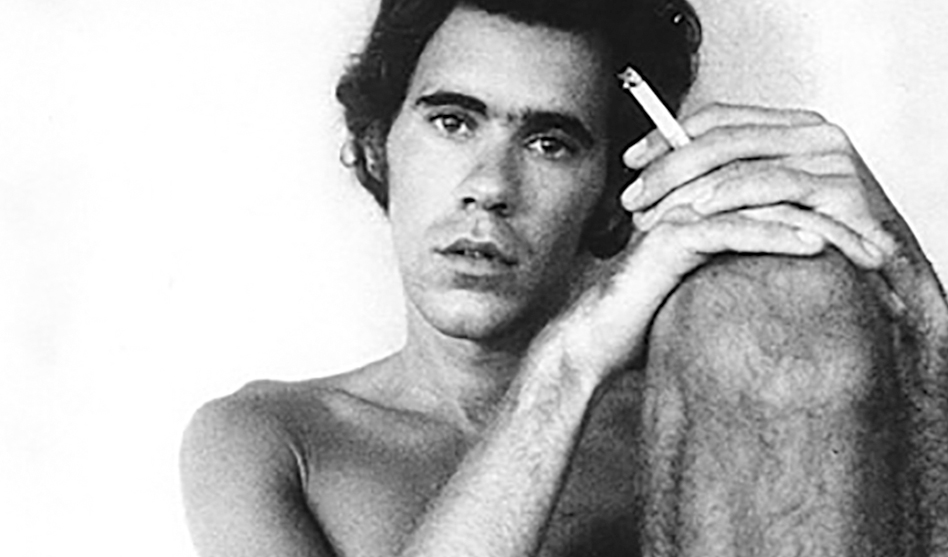
Joe Brainard

Little-Known Facts about People
Joe Brainard

Photograph by Peter Hujar
Sex (written in 1969)
.
I like sex best when it’s fast and fun. Or slow and beautiful. Beautiful, of course can be fun too. And fun, beautiful. I like warm necks. And the smalls of backs. I’m not sure if that’s the right word: small. What I mean is the part of the back that goes in the most. Just before your bottom comes out. I like navels. I like under-arms. I don’t care for feet especially, or legs. I like faces. Eyes and lips and ears. I think that what I like most about sex is just touching. Skin is so alive. I like cold clean sheets. I like breasts and nipples. What I’m a sucker for most is a round full bottom. I really don’t like that word bottom. I think underwear is sexy. I like hair on heads, but hair on the body I can take it or leave it. Skinny builds don’t turn me on as much as normal builds. Probably because I’m skinny myself. I have a weak spot for blonds. I like to fuck sometimes but I don’t like to be fucked. What I really like is just a good plain blow-job. It’s rhythm that makes me come the best. I don’t think that, in bed, I take a masculine role or a feminine role. I guess I must be somewhere in between, or both. Sex-wise I’m not very adventurous. I am sure that there are a lot of things I like that I don’t know I like yet. I hope so. So—now you have some idea of what I like in bed.
Saturday, September 10, 2022
Amy Gerstler
Fruit Cocktail In Light Syrup
Rocket-shaped popsicles that dyed your lips blue
were popular when I was a kid. That era got labeled
"the space age" in honor of some longed-for,
supersonic, utopian future. Another food of my
youth was candy corn, mostly seen on Halloween.
With its striped triangular "kernels" made
of sugar, wax and corn syrup, candy corn
was a nostalgic treat, harkening back to days
when humans grew, rather than manufactured,
food. But what was fruit cocktail's secret
meaning? It glistened as though varnished.
Faint of taste and watery, it contained anemic
grapes, wrinkled and pale. Also deflated
maraschino cherries. Fan-shaped pineapple
chunks, and squares of bleached peach
and pear completed the scene. Fruit cocktail's
colorlessness, its lack of connection to anything
living, (like tree, seed or leaf) seemed
cautionary, sad. A bowl of soupy, faded, funeral
fruit. No more nourishing than a child's
finger painting, masquerading as happy
appetizer, fruit cocktail insisted on pretending
everything was ok. Eating it meant you embraced
tastelessness. It meant you were easily fooled.
It meant you'd pretend semblances,
no matter how pathetic, were real, and that
when things got dicey, you'd spurn the truth.
Eating fruit cocktail meant you might deny
that ghosts whirled throughout the house
and got sucked up the chimney on nights
Dad wadded old newspapers, warned you
away from the hearth, and finally lit a fire.
Dan Beachy-Quick

Responses to ----
for Stewart Breck
What is it damns the eye?—. Asymmetry
In ecological dynamics?—. What dams
The eye?—. Trends of the autumnal trees’
Later colorings, and on delay, migrations,
Or migrations, as the robins in November
Clamor in the Russian Olive, forgotten?—.
And who while crying out remembers
No one, not angels, not animals, no one
Hears that cry?—. Even the one crying
Doesn’t hear?—. A lever of infinite
Length can lift an infinite weight, or am I
Lying?—. A bee could land on a bloom and lift
The world up?—. Or a butterfly?—. Beauty
Reckons terror?—. O, bees—. O, butterfly—.
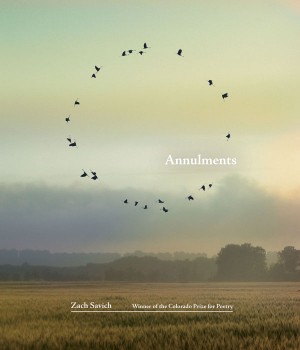
Zach Savich
If the dead have preferences they must prefer the future tense
Will you be sitting by a window in this year
As though asking affirms
What wouldn’t they affirm
Shirt hung for a curtain
Having washed it in the sink each night
My ship will be the turning one
Its sail is shining rain
Zach Savich
with Claudia Keelan
A HAPPY BOOK, OR: ORB MADE OF MANY PENNIES AND INVISIBLE TAPE
My poetics is simple: I think we should employ the full capacity (or a limited capacity, fully) of both language and the world, like a walk with a smart friend does. There's a house that looks like driftwood, a dog hitched to a clothesline. Doggy runs, so some loose plastic pins slide along the cord, like beads down an abacus. I mishear my friend: "abacus" becomes "platypus." This is all very interesting, which is the whole of my process: I try to be very interested. I have feelings and write them down. I go for walks, drink coffee, talk to friends. My experience of the world/language is not trite or nonchalant or impenetrable or random so why should my poems be? I get stuck on this: if the full capacity is possible, how can we bear anything else? I guess capacity rhymes with catastrophe, so maybe my book should be called Full Capacity Living. Of course, Full Living Capacity would be better: poetics as the revelation of sensibility via the sensations we honestly know by such instincts/ears.
Poetics: Last night watching football while we wrote unpublishable poems in the style of Basho and Sora, reading to each other from the selected poems of Merrill Gilfillan and the journals of Lewis and Clark, a friend and I invented collective nouns (a Song of Solomon of Pork Tacos, a Tolerance of Stars), looking up when we heard the hits. The color commentator seemed to be having problems at home—"Why bother going for the field goal? They'll still need another touchdown." At one point, action on the field cut him off. All he said was, "You'd need a laser." Call me: Man Narrating Football Accidentally But Revealingly Speaks of Lasers or Homelife.
I read the proofs of my book at Dunkin Donuts. I was surprised by how happy the poems seemed. I had thought they held only panic, desperation, folly. I had no idea I had written a happy book.
A teacher said: you need to decide if you think the world is meaningful or not. And then, whether it is or not, if art can be. And if art can be, shouldn't it?
Poetry as cosmology, as echolocation, as what you want to read when you are sick of TV (I can only read Shakespeare when I am sick of TV). As faith in empiricism; because we experience language, even the best abstractions are empirical. Not can poetry matter but poetry is matter.
Because maybe we've been wrong about it all—how wonderful! I write now with apples outside, dusk. I want to say I am looking through the peel of a hollowed apple. I think of an orb made of pennies stuck together with invisible tape. I want to write books that will thrill you in a used book store in ten years.
Zach Savich

In the painting by Degas, the dancer is not
on a cell phone, but holding her head. I left the museum.
Ann was sick. There were shoes all along the bridge,
and the senseless branching of ambulance sirens: one going west
on Henderson, another east. Technicolor weather. A man
in white coveralls was carrying a traffic cone
over his head, he was an Elmer's glue tube.
In the painting of terns on rigging,
when you remove the terns from the rigging, there is
only canvas behind, not sky. Ann vomited
off the bridge, the way a single page can slide
from its binding. It became harder for me to read on
in the biography, knowing there is no part of the body
a bullet hasn't pierced. Piercework. I worked in a chowder house
and got to bring home all the innards we extracted
from bread bowls. I had a friend who was a trumpet player
who'd come home from a show and, sleepless, play more.
His apartment was so small, his trumpet
stuck into the alley. Ann slept for two or three months.
Snow like tissue after tissue pulled from a box.
I drove Ann to the hospital. On the first day of spring I saw
the Elmer's man standing on the traffic cone point
of his head at a rave. Trees blossomed outside the hospital
the way champagne bottles christen ships. I wheeled Ann
to the museum and we watched the Indian out front
raise his arms to weather. I talked about the Caravaggios
facing each other in Santa Maria del Popolo, the pose
of Paul, receiving, so close to the pose of Peter,
received; saints open their arms. Pieced through.
My friend the trumpet player emptied his spit valve onto pigeons.
He watched a woman climb onto her fire escape, nude,
her husband cursing from the window. I gave up on
the biography. I left the rave. Ann held her head.
The ambulances were just roaming, moving things around.
I put on some shoes I found on the bridge, then left the bridge.
Ann bruised. Her mom showed up. It was July.
mIEKAL aND
Misha Sprocket, do.not.hold.these.words.as.dear Limbs extending outward from. These eyes are your eyes, not mine? Subliminal does not sub...